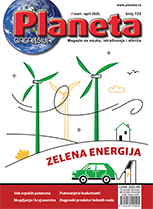
The latest European Directive on Renewable Energy Sources indicates that by 2030, EU members must raise the threshold for the use of renewable energy in total consumption - from 32 to 42.5 percent. Some countries, above all Scandinavian countries, have already exceeded the set goals and use renewable energy for close to or even more than half of their own energy consumption. A significant part of that comes from biomass power plants (with Sweden and Finland as leaders), and then from wind power plants (with Denmark as the leader).
Germany covers about 56 percent of its total electricity consumption with renewable sources such as wind, solar, biomass and hydropower. At the same time, the production of solar energy has jumped the most, and in the first three months of 2024, 15 percent more energy was used than in the same period of 2023. In this regard, Croatia is at 31.03 percent, but primarily thanks to hydropower plants and wind farms, from which it receives about 12.5 percent of its consumed electricity. That is why it still has low usage of solar power plants, which, according to data from 2022, made up only 0.43 percent of available energy. This is especially visible when compared to the Netherlands, which fulfills 17 percent of its energy needs from solar power plants.
A CENTURY SINCE THE FIRST SERBIAN PATENT
Unknown People for Great History
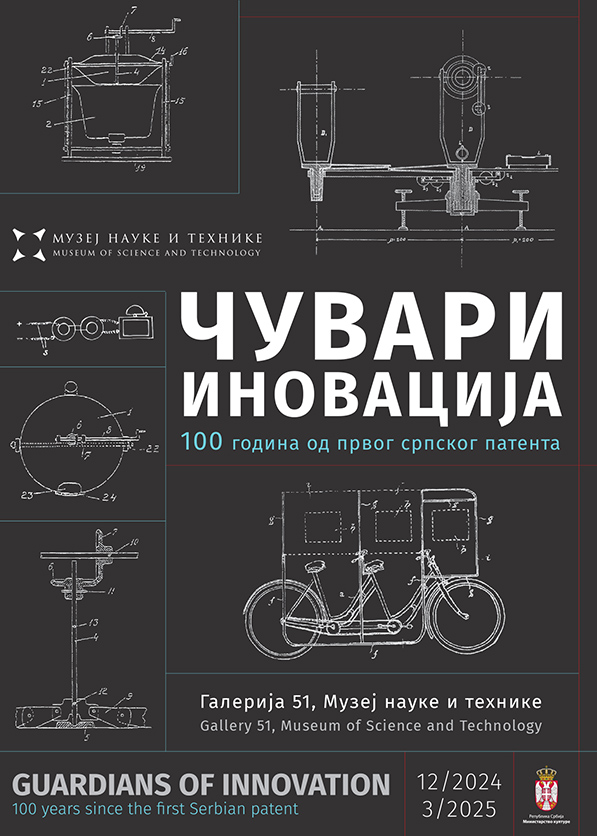
At the exhibition "Guardians of Innovation: 100 Years Since the First Serbian Patent", which will run until the end of March at the Museum of Science and Technology in Belgrade, models and mock-ups of the first registered applications in the then Administration for the Protection of Industrial Property are on display.
Before the First World War, Serbian inventors, among whom the most important are Ljubomir Klerić, Kosta Milovanović Koka, Mihailo Petrović Alas and Vladimir Stanojević, could only register their inventions abroad. It was only after 1920 that the conditions from Article 12 of the Paris Convention on the Protection of Industrial Property from 1883, to which the Kingdom of Serbia was a signatory, on the establishment of a special service for industrial property, were met. Today's Institute for Intellectual Property was formed under the name of the Directorate for the Protection of Industrial Property.
SPACE
Life on Mars?
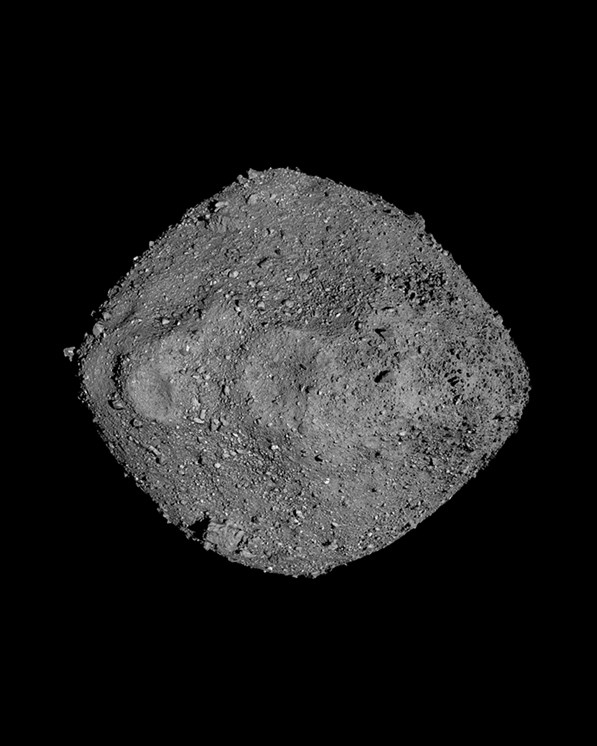
Asteroid Bennu is a small asteroid, about 560 m in diameter. This asteroid, unlike most asteroids, does not orbit in the main asteroid belt (between Mars and Jupiter), but its orbit is mainly between Earth and Mars, although it can briefly cross Earth's orbit and be a little closer to the Sun than Earth. For this reason, Bennu is a potentially dangerous asteroid, leaving behind itself a trail of dust and thus behaves like a comet. However, that is not what is most interesting. Asteroid Bennu has a relatively dark surface, which means it is rich in carbon compounds; that is, it has not changed much since its creation. This could further answer the question: what did the solar system look like relatively soon after its formation? More importantly: how rich is this asteroid in the compounds necessary for the formation of life?
By researching this asteroid, we are getting closer to the answer to the question: how did life begin? That's why NASA launched a space probe to this asteroid in 2016. The goal was to land the probe on Bennu, take soil samples and bring them back to Earth. The mission was completed successfully: about 120 g of samples were collected, which arrived on Earth in 2023. These samples were distributed among scientists around the world.
Numerous organic compounds, rich in nitrogen, were discovered through the research. Among these compounds were also 14 of the 20 amino acids, the constituent parts of proteins. Also, all four main nucleobases that form DNA were discovered: adenine, guanine, cytosine, and thymine. The presence of ammonia was also determined. This does not mean that there was once life on the surface of Bennu, but, on the contrary, these molecules are necessary for the origin of life and are believed to have existed in the protosolar nebula, from which the solar system arose.
SPACE TOURISTS IN CHINA
A Trip from the Future
In the province of Jiangsu, in eastern China, one can find the headquarters of the company "Deep Blue", founded eight years ago. Its main activity is making rockets that can be used repeatedly. A few years ago, they conducted tests with their launch vehicle, which is called "Nebula 1" and uses the “Leiting-20" engine. Soon, an improved variant, "Nebula-2" appeared.
The Chinese Academy of Sciences, one of the world's largest scientific and technical research institutions, has its own space tourism company "CAS Space". Its headquarters are in the city of Guangzhou, in southern China. It has been operating for six years and has the first launch pad for commercial purposes. The Jiuquan Satellite Launch Center is located in the autonomous region of Inner Mongolia, where the ramp and supporting infrastructure are.
"CAS Space" is known for the series of rockets "Kinetica". Since both companies make rockets that can be used multiple times, it makes the whole endeavor less expensive so that the idea of space tourism is feasible. For now, a suborbital flight is planned for 2027. At the end of last year, two tickets were sold through a Chinese online shopping site. At a large discount, the price was one hundred and forty thousand dollars, which is half the cost of a similar venture in the United States or Great Britain.
The duration of the flight that will be performed by the company "Dip Blue" is 12 minutes, at an altitude of 100-150 km.
EVOLUTION
The Beginning is Called LUCA
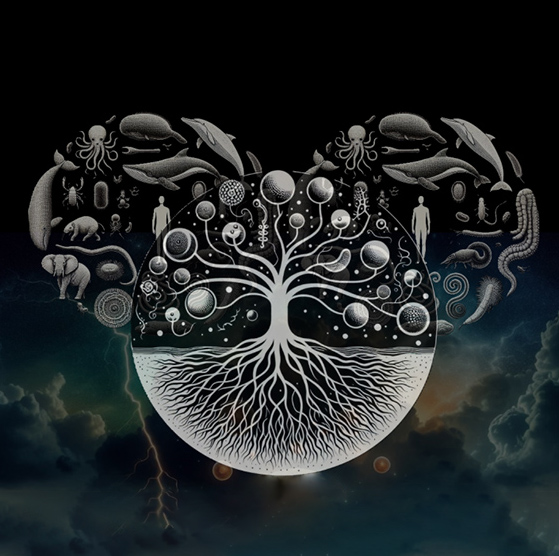
As far as we know today, the oldest living beings come from a cell that lived 4.2 billion years ago, which is several hundred million years after the origin of our planet, according to research conducted by researchers from the University of Bristol, Great Britain. Biologists named it "LUCA" (Last Universal Common Ancestor). It is said to have been not very different from today's bacteria.
The researchers were particularly drawn to the assumption that LUCA appeared to possess the rudiments of an immune system. It also had the same protein building blocks and used the same type of energy to power its cells, suggesting that life as we know it today came from the same source. Before these conclusions, scientists estimated that LUCA was formed about 3.9 billion years ago.
The researchers compared the genes of 700 living species of bacteria and archaea (microbes similar to bacteria), which live in extreme conditions, and selected organisms with these traits, believing that these could be the oldest forms of life and that eukaryotes originated from the union of those two types of cells. They then counted the mutations that occurred over time along the genome and in 57 genes shared by all 700 organisms. They used the estimated mutation rate to calculate when LUCA lived and determine its age using fossils containing traces of ancient life. Based on ancient fossils, they got an insight into the early atmospheric conditions on Earth, so it was estimated that LUCA lived about 4.2 billion years ago.
BIOSPHERE
A long-lived predator of icy waters
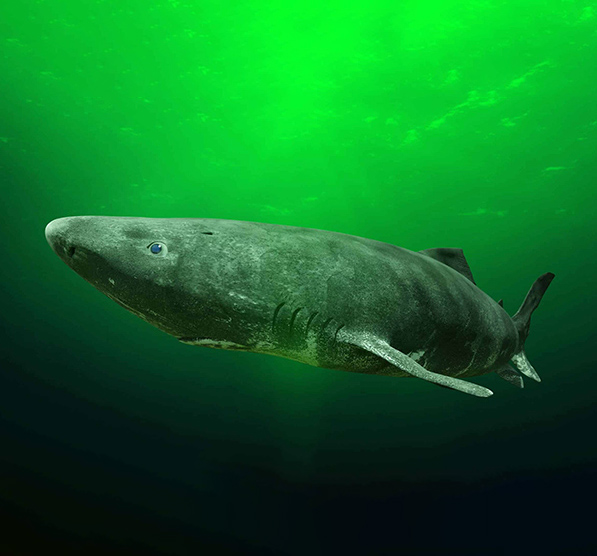
In several editions of magazines that deal with the popularization of science and scientific research, articles have recently appeared in which it is stated that the Greenland shark is the longest-lived vertebrate species today because it can live for hundreds, or even five hundred years! How long other shark species can live can be estimated by counting the bands on the fins or vertebrae of predators, similar to counting the years on a tree to determine the age of a tree. But Greenland sharks don't have those fin markings or any other features that tell how old they are...
Scientists had no choice but to guess how long sharks lived based on what they knew: sharks grow very slowly (less than 1 cm per year) and Greenland sharks reach sizes of 6 metres or more? Also, during the study, scientists used carbon dating to estimate the age of Greenland sharks and looked into their eyes. In the shark's eyes there are proteins that are formed before birth and remain there for years, something like fossils preserved in crystals. Scientific dating of sharks began with carbon dating of the mentioned proteins - although carbon dating can only be used to estimate and not definitively determine the age.
During the tests, scientists used sharks that were by-catch in fishermen's nets. Thus, it was determined that the largest shark they found was a 5 metre-long female; according to estimates, it was between 272 and 512 years old! This makes this species of shark the longest living vertebrate in the world. To make matters more interesting, female Greenland sharks reach sexual maturity when they are over 4 metre long, which they probably reach at 156!
EARTH'S CLIMATE?
On the Threshold of Environmental Alarm
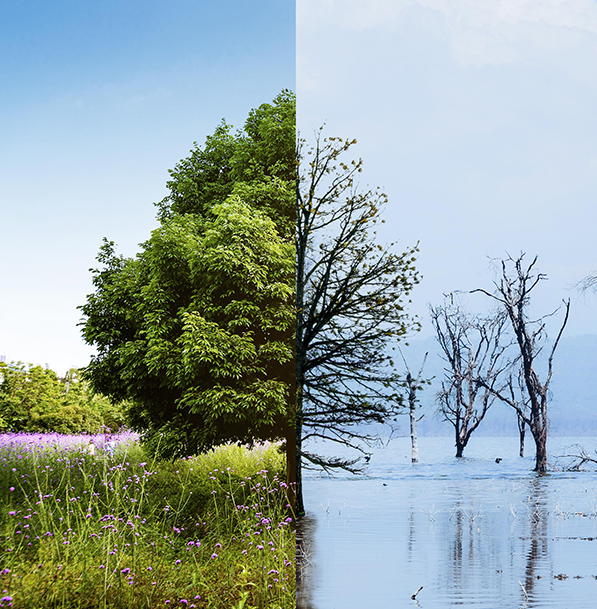
Concern for the health of the environment and measures for its protection are not an invention of modern times. Even the ancient Romans protected their water supply with legislation, and among the first environmental laws recorded in history is the ban on burning coal, by which the English King Edward I, in 1306, tried to prevent air pollution. Despite this, with the Industrial Revolution, the explosion of global traffic and other modern technological improvements of life and work, environmental problems have grown so much that the resulting emission of carbon dioxide and the "greenhouse" effect, which have been dangerously overheating the planet for decades, have brought us to the brink of ecological collapse.
The year 2024 was officially the warmest since temperature records began in the mid-19th century (1850), and is the first calendar year in which global temperatures exceeded pre-industrial temperatures by 1.5°C. According to data from the European Copernicus Climate Change Service, the European Union's Earth observation program, unprecedented global temperatures were recorded in 2024, after an extremely warm 2023, which itself was a record. The global average temperature on July 22 last year was 17.16°C, a record figure. At the same time, other climatic global records were broken - for the level of greenhouse gases, sea surface temperatures, as well as for atmospheric humidity, which contributed to extreme events such as floods, long heat waves and forest fires.
Kompletni tekstove sa slikama i prilozima potražite u magazinu
"PLANETA" - štampano izdanje ili u ON LINE prodaji Elektronskog izdanja "Novinarnica"